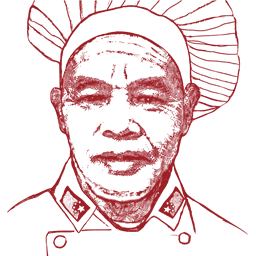
2026: Thoughts Prompted by a Viral Video
On the evening of 16 October 2026, the WeChat Channels account of the Sichuan Cuisine Museum posted a clip just over twenty seconds long. Li Jianzhong, a former chef at the Beijing Sichuan Restaurant, says to the camera, “Lots of dishes are gone now,” and names five of them. Three of the five appear on a state-banquet menu that Chen Songru drafted by hand in 1982. Within two days the clip had more than a thousand likes, more than a thousand shares and over two hundred comments, and the comment section was lively: some were nostalgic, others said “nobody eats that stuff, so it isn’t worth anything.” This exhibition does not set out to compile a list of lost dishes. Instead it places the video and the comments side by side with Chen Songru’s own manuscript, menus and books — the vanishing and the popular, the painstaking and the profitable, the state banquet and the ordinary table — to see what the contrasts make us think about.
One video: twenty-four seconds, over two hundred comments in just two days
Evidence legend: First-hand account Autobiography or direct disciple testimony · First-Hand Object Original photograph/certificate preserved by the family · Independent source Third-party media cross-verification · Biographical account Found only in biographical manuscripts · Unverified Conflicting accounts across sources

The clip runs about twenty-four seconds; the publisher’s opening caption reads “A round-up of traditional Sichuan dishes that are slowly disappearing.” Below are excerpts from the video’s own subtitles, which we read frame by frame; punctuation is ours.1
In the second half he describes how the dish is done: a young chicken is braised, the four large bones are taken out, it is wrapped in caul fat and deep-fried; the server carries it out, shows it to the guests first, and only then is it carved.
On 18 October 2026 the video’s official page showed 1,351 likes, 1,319 shares, 649 favourites and 224 comments. These are snapshots and will change.
Five dishes, three on the 1982 menu
Li Jianzhong names five dishes. Set them against the objects this site has already published: in draft B of the menu Chen Songru wrote by hand for Prince Sihanouk’s sixtieth-birthday banquet on 5 November 1982, braised ox-head slab is the second hot dish, caul-wrapped lantern chicken the fourth, and bean-curd-dregs duck breast the fifth. First-Hand Object2
| Dish | What the video says | Objects and records on this site |
|---|---|---|
| Caul-wrapped lantern chicken | “We still make it often too”; spicy-braised and white-braised versions | Fourth hot dish on the 1982 birthday-banquet menu; the dish Chen Songru cooked on his first visit to Zhongnanhai in autumn 1959 (see the 1959 exhibition); Chen Tinglong wrote that two whole chickens are used, one braised in five-spice white stock and one in red spicy stock First-hand account3 |
| Braised ox-head slab | One of the dishes that are “gone now” | Second hot dish on the 1982 menu; the drafts write “烧牛头方” (braised ox-head slab), the order form and the mimeographed menu “红烧牛头” (red-braised ox head) |
| Bean-curd-dregs duck breast | Same | Fifth hot dish on the 1982 menu; on all three menus |
| Walnut duck slab | Same | Not found in the objects and records this site currently holds |
| Roast crisp slab | Same | Not found in the objects and records this site currently holds |
Light red: dishes that can be checked against objects on this site
Two details are worth pausing on. First, “gone” is not tidy: in the same breath Li Jianzhong says “lots of dishes are gone now” and that the lantern chicken is something “we still make often.” Perhaps what disappears is not the name of a dish but the people who can and will cook it, and the occasions where one can eat it. Second, “shown to the guests first, and only then carved” — this step adds no flavour, only time. It is part of the dish, and it is exactly the part the comment section keeps saying no one can wait for.
“Signature showpieces” and “got into state banquets, into Zhongnanhai” are Li Jianzhong’s words in the video. The lantern chicken matches this site’s records; whether walnut duck slab and roast crisp slab were among Chen Songru’s signature dishes, this site has no independent material and makes no claim.
Caul-wrapped lantern chicken: from purse chicken to state banquets to today’s stoves
Of the five dishes, the caul-wrapped lantern chicken is the one Li Jianzhong says “we still make often,” and the one this site has the most sources on. Laid out in order, its story runs almost the whole length of one cook’s life.
Where it came from: reworked from the old Sichuan “caul-wrapped purse chicken”
Purse chicken was two slices of chicken breast sandwiching preserved-vegetable and shredded pork, wrapped in caul fat and deep-fried; “once carved and plated it did not look good, and the taste was plain salty-savoury.” As lantern chicken, it used Beijing spring chickens — “smaller than a pullet, bigger than a pigeon” — two whole birds, one in five-spice white stock and one in red spicy stock, boned, scored and shaped like lanterns, wrapped in caul fat and deep-fried: one dish, two colours, two flavours. First-hand account4
Another origin story exists: a 2026 social-media article says “lantern chicken” was created by Che Yaoxian, owner of the Nuli Can restaurant in Republican-era Chengdu, and spread through Chongqing’s Huixian Lou; that Chen Songru combined it with caul-wrapped purse chicken in 1959; and that it used a “three folds, five layers” caul-wrapping technique. This differs from Chen Tinglong’s account that it was reworked from purse chicken alone; this site has not been able to verify it independently, and both versions stand side by side. Disputed5
1959: on the trial-tasting table, the opening menu, the table at Zhongnanhai
It was among the hot dishes at the Sichuan Restaurant’s trial tasting that August; it was served after the opening on 1 October; and that autumn, when Chen Songru cooked for Mao Zedong at Zhongnanhai for the first time, it was one of the four dishes. Mao left half of it (the biography says “a third”) and, unusually, asked to keep it for the evening. A caul-fried dish must be crisp outside and tender inside; reheating ruins it. After talking it over with the restaurant’s Party secretary Deng Zhi, Chen Songru went back to the restaurant that night, “made a fresh pair of blanks,” and sent it out arranged to look exactly like what had been left at noon. When Mao had eaten it, he said: “We mustn’t waste such a delicious dish.” First-hand account6
The same episode appears in a different version in a book by his disciple Liu Zihua, recorded as Chen Songru telling it to young cooks: the dish is called “caul-wrapped purse chicken,” the time “early winter 1959”; and what was left he carefully put in order — the chicken, the caul fat, the preserved-vegetable pork — and handed over with instructions to Chairman Mao’s own cook, who rang the next day to say the Chairman had enjoyed it that evening. There is no “remade overnight.” The date is also given as 7 September or 7 October. This site sets the versions side by side and does not reconcile them. Disputed7
1959–1966: a menu that did not change for eight years
For eight years running, at May Day and National Day, Mayor Peng Zhen hosted the leaders who had watched the parade from Tiananmen at the Yangfengjiadao club — twelve tables each time, with a fixed menu: home-style sea cucumber with minced pork, caul-wrapped lantern chicken, red-braised ox head, bean-curd-dregs duck breast, mushrooms with greens or boiling-water cabbage, dry-braised fish, milky-broth vegetable stew, dandan noodles and sweet rice balls. Several times the kitchen asked to change the dishes; the answer was: “You may add dishes, but not change them.” Biographical account8
Notice: caul-wrapped lantern chicken, red-braised ox head and bean-curd-dregs duck breast — three of the dishes the video says are “gone” — appeared together on this menu for eight years, and together again at Sihanouk’s birthday banquet in 1982. It was the kitchen that wanted to change dishes, and the guests who refused.
1972: Jinniuba, the two dishes a father taught his son
Chen Tinglong recalls that when it was settled that he would follow his father to work at the Beijing Sichuan Restaurant, his father took him to the Jinniuba guesthouse and taught him two dishes with his own hands: caul-wrapped lantern chicken and boiling-water cabbage. First-hand account9
More than fifty years later, a former chef of the Beijing Sichuan Restaurant says in the video that this dish is something “we still make often.”
How three accounts describe the method — where they agree
| Step | Chen Tinglong’s account | Standard recipe in the bookIndependent source10 | Li Jianzhong’s video (2026) |
|---|---|---|---|
| Main ingredient | Two Beijing spring chickens | Two young cockerels, about 1,500 g in all | Young chicken, cockerel |
| Seasoning | One in five-spice white stock, one in red spicy stock | Rubbed with rice wine, salt, MSG and pepper; one left plain, the other rubbed inside and out with chilli oil; marinated two hours with ginger, scallion, Sichuan pepper and spices, then steamed until tender | Braised in stock — spicy and white versions |
| Boning | Boned, scored, shaped like a lantern | Leg and wing bones removed, body cut into large pieces | “The four big bones taken out” |
| Wrapping | Wrapped in caul fat | Coated with egg-white and starch batter, wrapped twice in caul fat, then rolled in dry starch | “Wrapped in caul fat” |
| Cooking | Immersion-fried | Fried through in oil at 60% heat; fried again as the oil gets hotter, until the caul is crisp | “Immersion-fried” |
| Serving | One dish, two colours, two flavours | Cut into long pieces, reassembled into the shape of the bird, served with spiced salt | Carried out by the server, shown to the guests, then carved |
Light red: steps where the three accounts differ
Decades apart, the three sources agree on the core: two chickens, two flavours, four big bones out, wrapped in caul fat, immersion-fried. They differ in two places. For seasoning, Chen Tinglong and Li Jianzhong say “braised,” while the book says “marinated, then steamed.” For serving, the book has the bird cut and reassembled in the kitchen and served with spiced salt; the video has it carried to the guests to be looked at before it is carved. The first difference may reflect different decades or kitchens; the second shows that part of this dish is finished at the table.
Two recipes: caul-wrapped lantern chicken and sizzling rice-crust pork
This site has lesson pages for sixteen dishes. Two of them match the “vanishing dishes” in the video and comments directly: the lantern chicken from the video, and sizzling rice-crust pork, which two much-liked comments describe as “once everywhere, now hardly anyone makes it” and “even rice-crust pork is rare now.” Below are the key steps for both, as reconstructed from the book — a summary in our own words; full method, ingredient tables and other versions are on the lesson pages.
Caul-wrapped lantern chicken
Ingredients: two young cockerels (about 1,500 g in all), 750 g pork caul fat, two eggs, 1,500 g cooking oil (150 g absorbed); 30 g salt, 40 g rice wine, 25 g ginger, 25 g scallion, 50 g chilli oil, 5 g Sichuan pepper, 5 g ground pepper, 2 g MSG, spices and dry starch as needed; two dishes of spiced salt.
- Clean the birds, remove head and neck, blanch to remove blood and rinse; rub with rice wine, salt, MSG and pepper.
- Put one bird in a bowl for the plain version; rub the other inside and out with chilli oil and put it in another bowl for the spicy version. Add ginger, scallion, Sichuan pepper and spices, marinate two hours, steam until tender, then cool.
- Remove the leg and wing bones and cut the body into large pieces. Mix egg white with dry starch into a batter.
- Spread out the cleaned, dried caul fat; lay on the bird, brush with batter, wrap in one layer of caul; brush again and wrap a second layer; roll each bird in dry starch.
- Fry in oil at 60% heat until cooked through; when the oil is hotter, fry again until the caul is crisp.
- Cut the body into long pieces, reassemble into the shape of the bird, and serve with spiced salt.
The book marinates and steams; Chen Tinglong and the video braise in stock. Both methods are recorded — see the previous unit. Independent source11
Full lesson page →Sizzling rice-crust pork
Ingredients: 150 g pork tenderloin, 175 g rice crust, 50 g soaked bamboo shoots; soy sauce, sugar, vinegar, MSG and ground pepper as needed (for a lychee-flavour sauce; the manuscript gives no weights); rice wine, salt, sliced ginger and garlic, scallion, pickled chilli and starch slurry as needed; 100 g lard, 1,500 g cooking oil (125 g absorbed), 1,250 g stock.
- Trim the tenderloin, slice thinly, season with rice wine and salt, and coat with starch slurry.
- Slice the bamboo shoots and blanch; break the rice crust into thumb-sized pieces; mix soy sauce, sugar, vinegar, MSG, pepper, stock and starch into a lychee-flavour sauce.
- Stir-fry the pork in hot fat, splash in rice wine, add ginger, scallion and pickled chilli, add stock, pour in the sauce, thicken lightly and transfer to a bowl.
- In another pan, fry the rice crust in oil at 70% heat until golden and crisp; put it on a plate, add 25 g of the hot oil, and carry it to the table together with the pork and sauce.
- In front of the guests, set down the rice crust and quickly pour on the sauce: a loud sizzle, a puff of steam, and a waft of lychee fragrance.
Pages 31–33 of the 37-page manuscript give its recipe and call it a “dish with a sound” — leftover rice crust turned into a celebrated dish — and record an anecdote from 1980: the Philadelphia food critic Richman came specially to eat it. First-Hand Object12
Full lesson page →The two dishes share one thing: their last step happens in front of the guests. The lantern chicken is shown to the table before it is carved; the rice-crust pork has its sauce poured on at the table so everyone hears the sizzle. What they need is not only skill in the kitchen, but guests willing to stop, look, and wait a moment.
Six contrasts from the comments
We read about 110 of the comments under the video (224 in total as of the evening of 18 October) and picked out six pairs of opposing remarks. The two columns are not right and wrong; they are two sides of the same thing. Comments are quoted in short, without user names, with emoji removed and meaning unchanged; translations are ours.13
Vanishing · Popular
“It’s all jianghu cooking now — lots of oil, heavy flavours. Traditional Sichuan food is only in high-end restaurants; ordinary people can’t get it”Commenter in Chongqing · 212 likes, the most-liked comment
“Times change, dishes have to change too — otherwise how would Sichuan food have spread all over the country”Commenter in Beijing
Painstaking · Profitable
“Kung-fu dishes take real work. The ingredients aren’t expensive — the skill is”Commenter in Sichuan
“Nobody eats that stuff, so it isn’t worth anything”Commenter in Guangdong
State banquet · Ordinary table
“The real essence of Sichuan cuisine is official-household and state-banquet food, though plenty of home-style dishes are famous too”Commenter in Sichuan
“Sorry, but only what ordinary people can afford counts as a classic”Commenter in Sichuan
Slow · Fast
“There’s a reason these dishes made it to state banquets — plenty of time to prepare, reliable ingredients. Restaurants today can’t manage it; the owner needs table turnover”Commenter in Sichuan
“What people want now is short waits and fast service — customers like it, and so do the owners”Commenter in Hainan
Lost · Still here
“Almost every Sichuan dish that tests a chef’s skill has been lost! Why is that?”Commenter in Guangdong
“I tried making walnut duck slab — it didn’t fall apart” (with a photo of the result)Commenter in Sichuan
Numbing-hot · A hundred flavours
“Now it’s heavy oil, heavy chilli, heavy numbing pepper — every dish just gets a dollop of hotpot base, and there’s nothing distinctive left”Commenter in Sichuan
“The main dishes of Sichuan cuisine aren’t numbing-hot at all”Commenter in Sichuan
A few remarks have no opposite but go to the heart of it: “There’s no textbook — however well you describe it, nobody knows how to make it”; “Is there a recipe?”; “Top-level chefs are rare now, and diners who have tasted real Sichuan food are rare too”; “Prepared meals are everywhere now, and we’ve never even heard of these good dishes, let alone eaten them… I’m willing to bring my own stomach and pay to try them.” The first two ask how a craft is passed on; the last two say that for a dish to live, someone has to eat it.
The yardsticks Chen Songru left
Chen Songru died in 1993. He never saw streets full of jianghu restaurants or prepared meals in restaurant kitchens. But in his manuscript, his books and his disciples’ memories he left a few yardsticks. Below are only the ones with sources, each marked with its evidence grade.
Yardstick one: grand banquets and home cooking are one system
Around 1980, in his 37-page manuscript The History and Characteristics of Sichuan Cuisine, he divided all Sichuan dishes into four classes: high-grade banquets, “complex to make … grand in style”; ordinary banquets, “local ingredients … plain and generous”; everyday meals, “carefully chosen ingredients, technique suited to the ingredient, flexible methods, economical”; and home-style cooking — twice-cooked pork, mapo tofu, garlic-dressed pork and the like. First-Hand Object14
The comment section argues over whether “the essence is state-banquet food” or “only what ordinary people can afford counts as a classic.” In his classification the two do not clash: each of the four classes has its own standard, and none is a cut-price version of another.
Yardstick two: the fear was not fewer dishes, but dishes “losing their flavour”
The direct reason he began writing books late in life was his sense that “some Sichuan dishes had ‘lost their flavour’ in the course of transmission” — that some so-called Sichuan food was changing methods and seasoning ratios at will to cater to local tastes, and losing its character. First-hand account15
The comment that “every dish just gets a dollop of hotpot base” worries about the same thing he worried about forty years ago. But note: what he feared was changing it for the worse, not changing it — see yardstick four.
Yardstick three: chilli is only a few of twenty-three flavour profiles
Page 9 of the manuscript reads: “Sichuan compound flavours: eleven profiles for hot dishes, twelve for cold dishes.” Page 14 goes on: fish-fragrant uses the heat of pickled chilli, home-style the heat of bean paste, scorched-chilli the toasted aroma of dried chillies — “their numbing and their heat are never the same … which is why we say: for food, China; for flavour, Sichuan.” First-Hand Object16
“The main dishes aren’t numbing-hot at all” overstates the case, but it points the same way as the manuscript: in his system salty-umami, lychee and sweet-fragrant are proper flavour profiles, and numbing-hot is just one of them.
Yardstick four: famous dishes are made by eating, and passing on is not copying
Two lines from the biography manuscript are often quoted: a famous dish’s fame “is ‘eaten’ into being by diners”; and he told his disciples, “You are yourselves first; only then can you be called Chen-school Sichuan cuisine” — meaning, do not copy him exactly. Biographical account17
Put side by side, the two lines make both camps uneasy. The first stands with “the profitable”: if nobody eats a dish, it cannot survive. The second refuses simple conservatism. As this site notes on the Wisdom & Philosophy page, between his “don’t lose the flavour” and “don’t copy me exactly” the biography never draws a clear line, nor does it ask whether popular taste can be led astray by marketing. That question is left to us.
Yardstick five: next to the state-banquet stove, keep a window open for ordinary people
According to his disciple Liu Zihua, while the Sichuan Restaurant was being set up in 1959, Zhou Enlai asked during an inspection where ordinary people would be able to taste Sichuan food, and told them to keep the “Erbei dining room” open for à-la-carte service. Biographical account18
The restaurant built for state banquets was asked from the very start to keep its doors open to ordinary people as well. Read next to that starting point, the most-liked comment — “ordinary people can’t get it” — carries a different weight.
Two books, two fates
In the comments, someone asks “Is there a recipe?” and someone else says “there’s no textbook.” One commenter posts the cover of an old book; another says “I only learned about Sichuan food from Mr Chen Songru’s book”; another, “I was lucky enough to read Master Chen’s Sichuan Restaurant Recipes.” Chen Songru’s answer to “lost” was written long ago, in two books — and their fates are themselves a contrast. First-Hand Object19
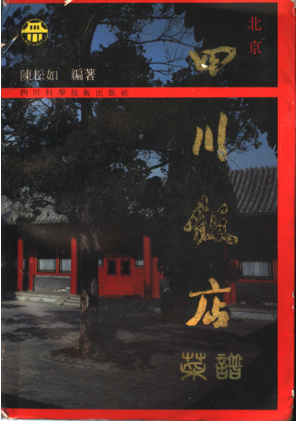 1989 · Banquet dishes
Beijing Sichuan Restaurant Recipes
Sichuan Science and Technology Press. Built around banquet dishes for the four seasons, with ingredient ratios and steps, and cost accounting too. The copyright page gives a print run of copies 1–9,600; apart from the 50 he kept, all were given by the restaurant to banquet guests and never sold.
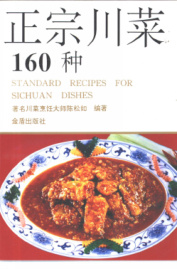 1991 · Everyday dishes
Authentic Sichuan Cuisine: 160 Dishes
Jindun Press. 160 dishes in seven groups, with colour photographs, written for households, enthusiasts and teaching institutions at an affordable price. By its 16th printing in 2001, about 931,000 copies in total.
The book about state banquets was printed in fewer than ten thousand copies and given away; the book about home cooking was printed in more than nine hundred thousand and has travelled all the way into today’s comment section. The one that went furthest was the one written for ordinary people. This does not mean banquet dishes don’t matter; it means that for a craft to survive, it first has to be written down, and then get into many hands.
If Chen Songru saw this video (curatorial simulation, not his own words)
In the voice of an old master, this site imagines how he might answer a few questions raised by the video and its comments — an extrapolation of his known mental models, not anything Chen Songru actually said.
Quotation and rights
- Video: copyright belongs to the Sichuan Cuisine Museum WeChat Channels account (published 16 October 2026, marked as original). This exhibition quotes only the video’s cover and short subtitle excerpts, for commentary and research, with attribution; the video itself has not been downloaded and republished, edited or reposted. To watch it in full, click the cover above and scan the code to view the original in WeChat.
- Comments: copyright belongs to each commenter. We quote only short phrases, without user names or avatars, removing emoji only and keeping the meaning; we do not quote comments that disparage regions or groups or target specific businesses. If you wrote one of these comments and would rather not be quoted, please write to us and we will remove it.
- This site’s sources: ownership and catalogue numbers for the manuscript, menus, copyright pages and other objects are given in the Digital Archive and in each note.
- Curatorial simulation: the questions and answers in Unit 07 are written by this site, not by Chen Songru, and must not be cited as his words.
Sources
- Sichuan Cuisine Museum, WeChat Channels: “Li Jianzhong, a former chef at the Beijing Sichuan Restaurant: which vanished Sichuan dishes do you know?”, published 16 October 2026 at 17:55, about 24 seconds. The subtitles are part of the video and were read frame by frame by this site on 18 October 2026; time codes are ours. The subtitle reads “拿手好戏” (signature showpiece) and is quoted as written. Engagement figures are from the video’s official preview page on the same day.↩
- First-Hand ObjectDraft B of the menu in Chen Songru’s hand (original held by the family). Hot dishes in order: boiling-water cabbage, braised ox-head slab, abalone with two-colour greens, caul-wrapped lantern chicken, bean-curd-dregs duck breast, fish-fragrant prawns, steamed soft-shell turtle; the order form and the mimeographed menu write “red-braised ox head.” Full images and a dish-by-dish comparison in 1982: One Banquet, Three Menus.↩
- First-hand accountChen Tinglong, A Brief Discussion of State-Banquet Sichuan Cuisine (original text): the caul-wrapped lantern chicken uses two whole chickens, one braised in five-spice white stock and one in red spicy stock. See this site’s caul-wrapped lantern chicken lesson.↩
- First-hand accountChen Tinglong, A Brief Discussion of State-Banquet Sichuan Cuisine (original text): to meet state-banquet standards, caul-wrapped lantern chicken was reworked from “caul-wrapped purse chicken,” using two Beijing spring chickens, one in five-spice white stock and one in red spicy stock — one dish, two colours, two flavours; the remark about purse chicken’s looks and plain taste is also from this text. See 1959: Sichuan Cuisine Comes to Beijing, Unit 06, and the caul-wrapped lantern chicken lesson.↩
- DisputedArticle on the WeChat account “Didu Jiufenbao,” 29 April 2026, listed on this site’s News page with the note that the Che Yaoxian / Nuli Can / Huixian Lou origin and the “three folds, five layers” technique have not been independently verified.↩
- First-hand accountChen Songru’s own account in A Short History of the Beijing Sichuan Restaurant and the biography manuscript Songfeng Ruren, ch. 6 §7; “made a fresh pair of blanks” is Chen Songru’s own phrase; the amount left at noon is “half” in the autobiography and “a third” in the biography. See 1959: Sichuan Cuisine Comes to Beijing, Unit 06.↩
- DisputedLiu Zihua, A State-Banquet Chef on Sichuan Cuisine: Anecdotes from the Sichuan Restaurant, chapter “The Caul-Wrapped Purse Chicken Chairman Mao Loved,” presented as Chen Songru’s own telling to young cooks. For the date of the first Zhongnanhai visit, a Chen Tinglong document gives 7 September and Songfeng Ruren ch. 6 gives 7 October; see “Gaps in the record” in the 1959 exhibition.↩
- Biographical accountSee 1959: Sichuan Cuisine Comes to Beijing, Unit 05; corroborated by family materials, awaiting independent verification.↩
- First-hand accountChen Tinglong’s oral-history manuscript Paolong Chenshi, ch. 2 §8.↩
- Independent sourceMasters of Sichuan Cuisine Explained: Chen Songru (Sichuan Literature and Art Publishing House, 2025), entry “caul-wrapped lantern chicken,” compiled from the section “Methods for dishes” in Chen Songru’s manuscripts; summarised in our own words. Sources for the Chen Tinglong column as note 4; for the video column as note 1.↩
- Independent sourceAs note 10: a standardised restaurant recipe, summarised rather than quoted in full; full ingredient table on the caul-wrapped lantern chicken lesson page.↩
- First-Hand ObjectChen Songru’s manuscript The History and Characteristics of Sichuan Cuisine, pp. 31–33 (recipe, the “dish with a sound,” the 1980 Richman anecdote); see 37 Pages: The Sichuan Cuisine He Wrote by Hand, Unit 05. Method reconstructed from Masters of Sichuan Cuisine Explained; see the sizzling rice-crust pork lesson page.↩
- Based on long screenshots of the comment section taken on a phone by the project lead on 18 October 2026, 20:27–20:29, covering about 110 comments (224 in total at the time). All comments are quoted as written, with emoji removed only; regions are the IP locations displayed with each comment.↩
- First-Hand ObjectChen Songru’s manuscript The History and Characteristics of Sichuan Cuisine, fair copy, pp. 4–5, held by the family; full manuscript in 37 Pages: The Sichuan Cuisine He Wrote by Hand, Unit 02.↩
- First-hand accountHis motive for writing, as recorded in the preface of the fair copy and in the section “From manuscript to print”; see the 37-page manuscript exhibition, Unit 07, and the Craft & Dishes page.↩
- First-Hand ObjectChen Songru’s manuscript, p. 9 (“eleven profiles for hot dishes, twelve for cold dishes”) and p. 14, “The Flavours of Sichuan Cuisine.” The biography and later publications give “twenty-four”; the two counts differ, and this site records both.↩
- Biographical accountThe biography manuscript Songfeng Ruren, ch. 13 §8 (“a famous dish’s fame is ‘eaten’ into being by diners,” the author’s summary) and ch. 13 §7 (“You are yourselves first; only then can you be called Chen-school Sichuan cuisine”). Neither has an original recording or document to check against.↩
- Biographical accountAs recalled and retold by his disciple Liu Zihua; see the 1959 entry on this site’s Life & Times page.↩
- First-Hand ObjectPhotographs of both books’ copyright pages (CIP data): Beijing Sichuan Restaurant Recipes, Sichuan Science and Technology Press, January 1989, copies 1–9,600; Authentic Sichuan Cuisine: 160 Dishes, Jindun Press, December 1991, about 931,000 copies by the 16th printing in 2001 (some early printings read “160 Recipes” on the cover). The 50 copies kept and the gifts to guests are from Chen Tinglong’s oral account. See the 37-page manuscript exhibition, Unit 07, and the Digital Archive.↩
Questions for you
This exhibition offers no answers, only a few questions.
- When a dish “disappears,” is it the name that has gone, the people who can cook it, or the occasions where one can eat it?
- Must “profitable” and “meaningful” be two separate roads? Which one is Authentic Sichuan Cuisine: 160 Dishes?
- Those few minutes when the dish is shown to the guests before it is carved — would you wait for them? How much would you pay for them?
- If a dish lives only in high-end restaurants, is it still alive?
- In your family, in your city, is there a dish that only the older generation can still make?
We would love to hear your answers, and any dishes and methods you know — please write to us.